



About Signal
Signal is an end-to-end encrypted messenger developed by the Signal Foundation, a non-profit organisation. Every Signal account is registered with a phone number, which Signal verifies with a code sent by SMS or voice call. After registration, users can hide their phone number from others and connect through a Signal username instead.
Why People Receive Signal Codes Online
People register Signal with a separate number when they want to keep their personal number out of their contacts' address books, when they test Signal on a second device, or when they need a contact for work that is separate from their private life. Journalists and researchers often keep a dedicated number for sources.
How to Register Signal With a Free Number
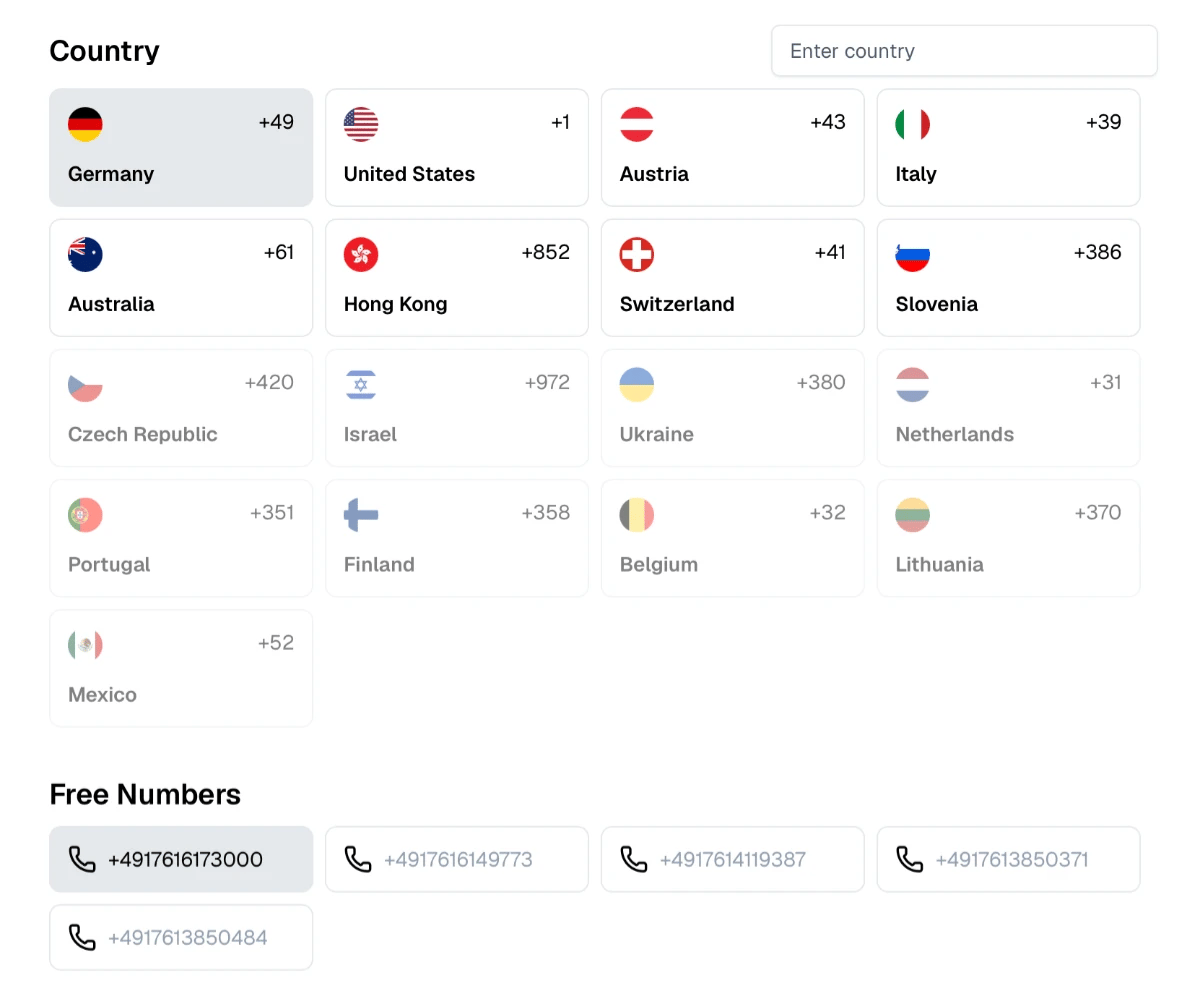
Open our free numbers and pick a number.
Enter it in Signal with the right country code.
Complete the captcha if Signal shows one.
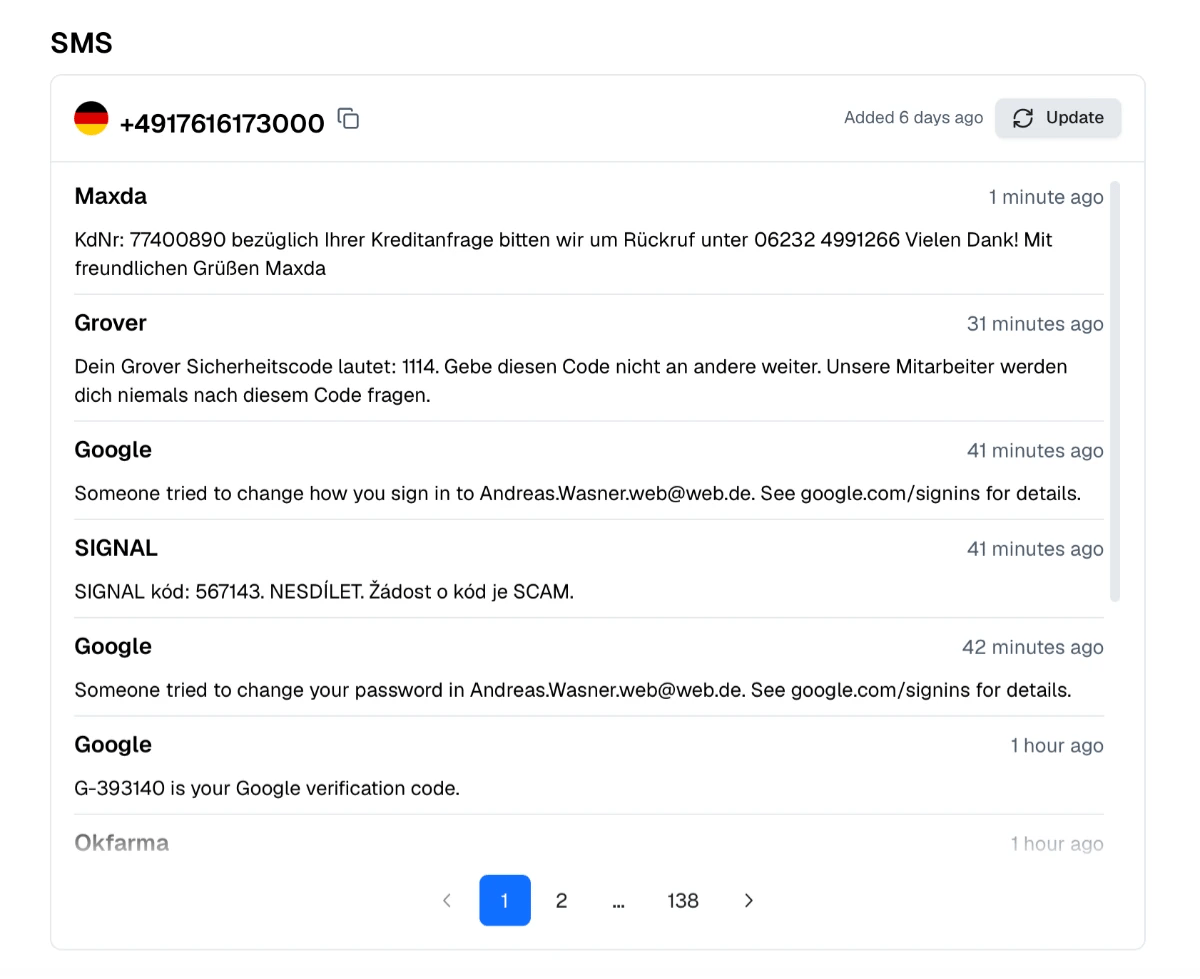
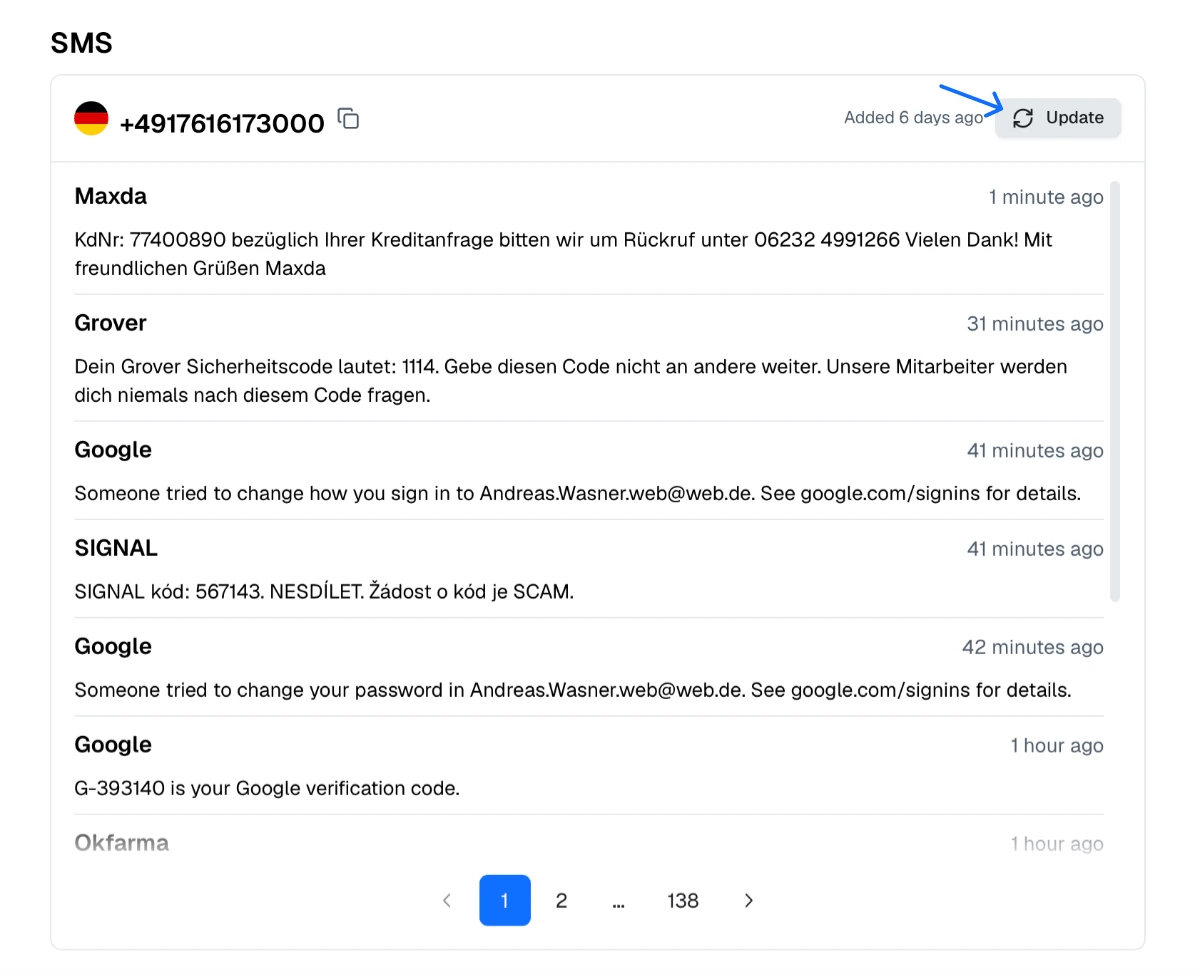
Refresh the number's inbox after 20–30 seconds and enter the code.
If Signal reports a registration lock, the number is already registered and protected with a PIN. Choose a different number.
Registration Lock and the Signal PIN
Signal's registration lock requires the Signal PIN before a number can be registered on a new device. If you keep a Signal account on a temporary number, set a PIN and turn on registration lock right away, so that the next person who uses the number cannot register it again.
Usernames and Phone Number Privacy
Signal lets you choose who can find you by your phone number and share a username or link instead. A separate registration number adds another layer and keeps your personal SIM out of Signal entirely.
Signal and Proxied Mobile Proxies
Signal encrypts message content, but the networks you connect through can still see your IP address. Proxied provides 4G/5G mobile proxies with real mobile carrier IPs in countries such as the United States, the United Kingdom, Germany, France and Spain, so you can keep your home connection private.